Keplr wallet Is a setup, funding, and sending guide
Keplr wallet Is a non-custodial crypto wallet used mainly for Cosmos ecosystem chains, including Cosmos Hub, Osmosis, Juno, Secret Network, and other IBC-connected networks. It helps users create addresses, receive tokens, send funds, connect to decentralized apps, stake supported assets, and approve transactions. Because Keplr wallet gives the user control of the recovery phrase and private keys, it also requires careful backup habits, address checks, and fee awareness before moving real funds.
What is Keplr wallet?
Keplr wallet is a browser extension and mobile wallet built for people who want to interact with Cosmos-based blockchains without relying on a centralized exchange for every action. It works as a self-custody wallet, which means the user manages access to the account instead of asking a platform to hold the funds. In practice, Keplr wallet is often used for ATOM, OSMO, and other assets that move across the Inter-Blockchain Communication protocol, commonly called IBC.
Keplr wallet is not a bank account, brokerage account, or guaranteed investment service. It is a software interface for blockchain accounts. The wallet displays balances, prepares transactions, requests approvals, and helps a user connect to decentralized applications. The underlying tokens and networks remain separate systems, so a balance shown in Keplr wallet depends on the selected chain, the token standard, and the current network state.
For a new user, the most important idea is that Keplr wallet separates ownership from convenience. The app can make crypto actions feel familiar, but the recovery phrase is still the ultimate key. If that phrase is lost, there may be no support team that can restore access. If it is exposed, another person may be able to drain the wallet. This tradeoff is central to every non-custodial wallet.
How does Keplr wallet work?
Keplr wallet creates and manages blockchain accounts through cryptographic keys. When a user sets up Keplr wallet, the wallet generates a recovery phrase or allows the import of an existing one. That phrase can derive addresses for supported networks. A Cosmos Hub address, for example, is different from an Osmosis address, even when both are controlled by the same wallet account.
Keplr wallet then acts as a transaction signer. When a user sends tokens, stakes assets, deposits to a decentralized app, or approves an IBC transfer, the wallet shows transaction details and asks for confirmation. The private key signs the transaction locally, and the transaction is broadcast to the relevant blockchain. The network, not Keplr wallet itself, decides whether the transaction is accepted and finalized.
The protocol side matters because Cosmos chains can be independent while still communicating through IBC. Keplr wallet makes this easier by showing multiple networks in one interface, but users still need to notice which chain they are using. ATOM on Cosmos Hub and ATOM transferred to Osmosis are related, but they are not displayed in exactly the same place. This is why chain selection is part of the practical workflow.
How do you set up Keplr wallet for the first time?
Keplr wallet setup usually begins by installing the official browser extension or mobile app, then creating a new wallet or importing an existing recovery phrase. Users should verify the official source before installation, because fake wallet extensions and lookalike apps are a common crypto risk. The safest habit is to confirm app names, publisher details, URLs, and current instructions from official sources before entering any sensitive information.
Keplr wallet will ask the user to back up a recovery phrase during setup. This phrase should be written down and stored offline in a location that cannot be easily photographed, copied, or accessed by someone else. Screenshots, cloud notes, email drafts, and chat messages are poor storage choices because they create additional exposure. A strong local password protects the app on the device, but it does not replace the recovery phrase.
Keplr wallet may also support multiple accounts, address books, connected sites, and network options. Before funding the wallet, it is useful to open the account view, copy the receiving address for the intended chain, and understand where deposits will appear. Users who are still comparing wallet concepts can also read a broader before deciding how much value to hold in one place.
How do you fund Keplr wallet from an exchange?
Keplr wallet can be funded by sending supported tokens from a centralized exchange, another wallet, or a decentralized application. The essential rule is to match the asset, network, and address. If a user wants to receive ATOM on Cosmos Hub, they should copy the Cosmos Hub deposit address from Keplr wallet and select the matching withdrawal network in the exchange. A mismatch can delay funds or make recovery difficult.
Keplr wallet users often start with a small test transfer when sending to a new address. A test does not remove all risk, but it can confirm that the address, network, and receiving flow are correct before a larger withdrawal. Exchanges may also require address whitelisting, confirmation emails, two-factor authentication, or waiting periods. Those requirements come from the exchange, not from Keplr wallet.
Keplr wallet deposits generally do not need a memo when funds are being sent to a personal non-custodial wallet address, but memo requirements vary by destination. Sending from Keplr wallet back to a centralized exchange is different, because many exchanges use shared deposit addresses and require a memo, tag, or destination identifier to credit the right customer. Always follow the receiving platform's current instructions before sending.
A practical funding flow usually looks like this:
Open Keplr wallet and choose the intended network, such as Cosmos Hub.
Copy the receiving address and verify the first and last characters.
Open the exchange withdrawal screen and select the matching asset and network.
Send a small test amount if this is the first transfer to that address.
Wait for the blockchain and exchange processing to complete before sending more.
How do you send tokens with Keplr wallet?
Keplr wallet sending starts by choosing the correct account and network, selecting the token, entering the recipient address, and reviewing the amount. The wallet may also show a fee choice before approval. A memo field may appear, but it is only needed when the receiving service requires one. Users should treat the confirmation screen as the final checkpoint, because blockchain transfers are usually irreversible after broadcast.
Keplr wallet can also maintain a recipient list, which helps reduce repeated address entry for frequent transfers. Even then, users should verify saved addresses before sending meaningful amounts. Malware, clipboard hijacking, phishing pages, and old contacts can all lead to mistakes. The safer pattern is to confirm the destination through a trusted channel and compare characters directly inside Keplr wallet before approving.
In practice, token sending is not only about pressing send. The selected chain must support the asset, the account must hold enough funds for network fees, and the recipient must be prepared to receive that asset on that chain. Keplr wallet makes these steps more visible, but it cannot guarantee that the receiving address belongs to the intended person or that an external service will credit a deposit correctly.
How does Keplr wallet handle Osmosis, IBC, and DeFi apps?
Keplr wallet is widely used with Osmosis and other Cosmos ecosystem applications because it can connect to web apps and approve actions from the wallet interface. A user may deposit ATOM to Osmosis through an IBC transfer, trade assets, provide liquidity, or interact with governance depending on the app and chain. These actions may involve smart contract, liquidity, validator, and market risks.
Keplr wallet does not make decentralized finance risk-free. When a user connects to a dApp, the wallet helps sign the requested transaction, but the user still needs to understand what the app is asking for. A deposit, swap, staking delegation, liquidity position, or governance vote can have different consequences. Users should review amounts, fees, token names, chain names, and approval prompts before confirming.
Keplr wallet can be especially useful when assets need to move between IBC-connected chains. The wallet may show assets on the original chain and on the destination chain separately, which can surprise new users. For example, funds moved into an app-specific chain may not look like a normal exchange balance. A dedicated can help explain why one wallet account may control addresses across several zones.
What are the fees and costs of Keplr wallet?
Keplr wallet itself may be free to install, but using blockchains normally involves network fees. These fees are paid to validators or network participants according to each chain's rules. When sending ATOM, depositing to Osmosis, claiming staking rewards, voting, swapping, or completing an IBC transfer, Keplr wallet may show fee options before the user approves the transaction.
Keplr wallet users should leave a small amount of the network's fee token available instead of transferring the full balance away. If every unit of a fee token is moved, the account may be unable to pay for the next transaction. This is especially relevant when moving ATOM, OSMO, or other native assets across chains. Fees can change with network conditions, software updates, and chain governance decisions.
Keplr wallet cannot remove exchange withdrawal fees, spread costs, market volatility, or decentralized app fees. If an exchange charges a withdrawal fee, that cost is set by the exchange. If a swap has price impact, that comes from market liquidity. The wallet is the approval and account interface, so users should separate wallet costs from the broader costs of moving and using crypto.
Is Keplr wallet safe?
Keplr wallet can be safe to use when installed from official sources, protected with strong device security, and paired with careful transaction review. The main risks are not limited to the wallet software itself. Phishing sites, fake support messages, malicious browser extensions, compromised devices, copied recovery phrases, and incorrect network choices are common reasons users lose funds in self-custody environments.
Keplr wallet safety starts with the recovery phrase. No legitimate support agent, website, airdrop form, validator, or community moderator should need that phrase. The phrase should never be typed into a random page to unlock rewards, fix errors, or verify ownership. If a site asks for it, assume the request is dangerous. Import the phrase only into trusted wallet software after verifying the source.
Keplr wallet users should also manage connected sites. A wallet connection is not automatically a transfer, but it can lead to transaction requests. Removing old connections, using separate accounts for experiments, and keeping valuable holdings away from risky dApps can reduce exposure. For larger balances, some users consider hardware wallet support where available, but that setup still requires careful confirmation of transaction details.
What are the main benefits of Keplr wallet?
Keplr wallet is popular because it brings many Cosmos ecosystem actions into one interface. Instead of using a different wallet for every chain, users can view accounts, copy addresses, connect to dApps, stake tokens, and approve IBC actions from a familiar flow. This convenience matters because Cosmos activity often spans several networks rather than one single blockchain.
Keplr wallet also gives users more direct control than leaving all assets on an exchange. Self-custody can reduce reliance on a centralized platform, allow participation in staking or governance, and make decentralized applications accessible. That control is not the same as lower risk. It simply shifts responsibility to the user, who must manage backups, transaction checks, and device security.
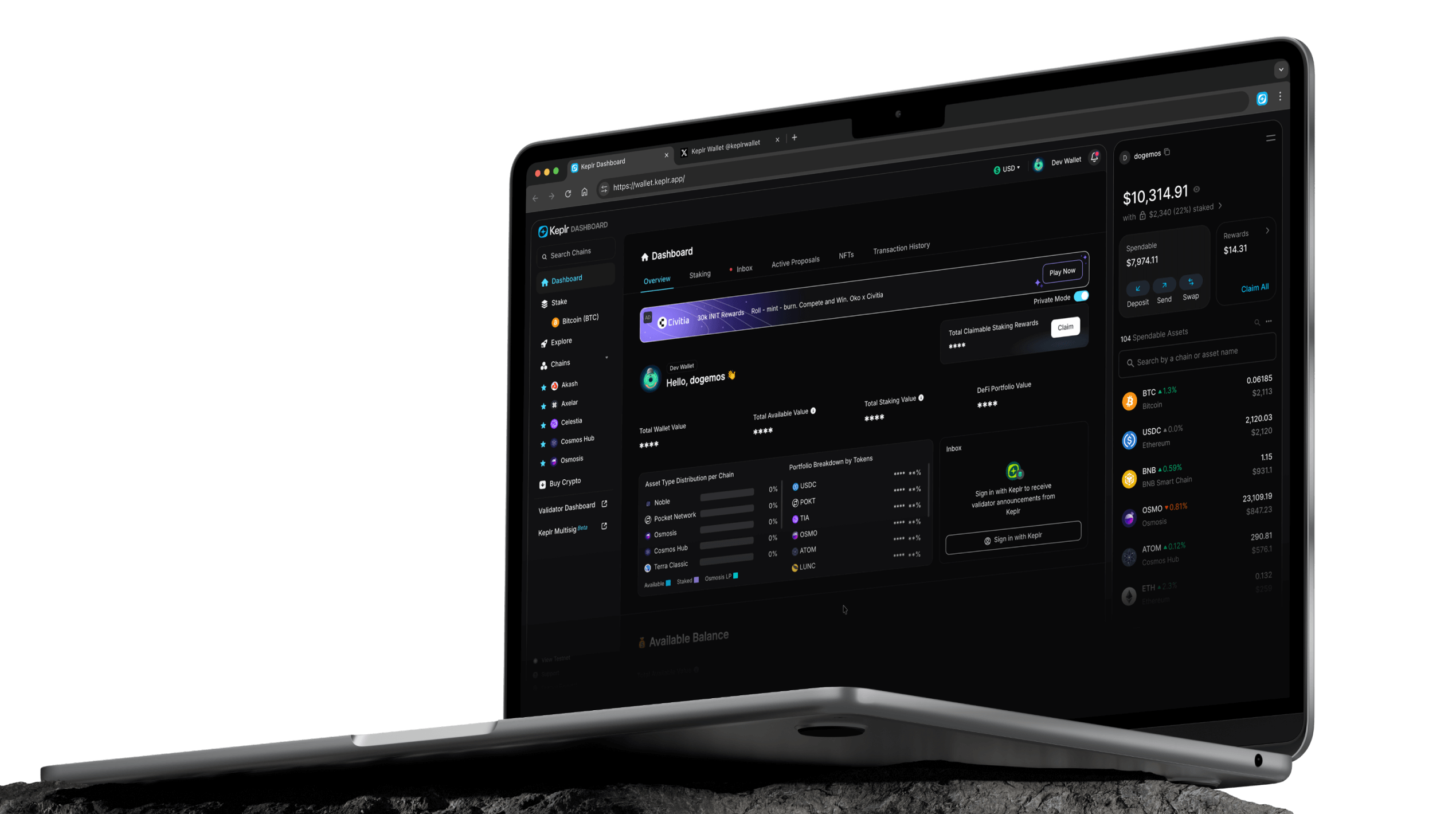
For active Cosmos users, Keplr wallet can become the primary dashboard for everyday actions. It can show balances across networks, provide receive addresses, request signatures, and help manage staking. For cautious users, it can also serve as a learning tool with small amounts while they become familiar with gas fees, memos, validators, IBC transfers, and app permissions.
How does Keplr wallet compare with other wallet options?
Keplr wallet is best understood as a Cosmos-first wallet, while some other wallets are built primarily for Ethereum, Bitcoin, Solana, or multi-chain exchange-style custody. A general multi-chain wallet may support more ecosystems in one place, but it may not feel as natural for Cosmos staking, governance, IBC transfers, or Osmosis-style workflows. The right choice depends on the chains a user actually plans to use.
Keplr wallet differs from a centralized exchange because it does not custody funds for the user. Exchanges can be convenient for buying, selling, and customer support, but they may limit withdrawals, require identity checks, and control the private keys while funds remain on the platform. Keplr wallet gives direct blockchain access, but it also removes many recovery options that exchange users may expect.
Keplr wallet should also be compared with hardware wallets and mobile-only wallets. Hardware devices can add a separate signing layer for supported assets, which may help users protect larger holdings. Mobile wallets can be convenient for quick scanning and smaller transactions. Many users combine tools: an exchange for fiat on-ramps, Keplr wallet for Cosmos activity, and a more conservative storage setup for assets they do not plan to move often.
What should you check before using Keplr wallet with real funds?
Keplr wallet becomes easier to use after the first successful deposit and send, but the first real transfer deserves extra attention. Confirm the official wallet source, back up the recovery phrase offline, choose the correct chain, test with a small amount, and keep enough native token for fees. These habits are simple, but they prevent many common mistakes.
Keplr wallet users should also remember that crypto networks change. Fees, supported chains, user interfaces, exchange withdrawal rules, staking conditions, and dApp risks can all shift over time. This guide explains the practical workflow, but it is not financial advice and cannot guarantee outcomes. Before committing funds, verify current details with official wallet, exchange, and network sources, then proceed only with amounts you understand and can afford to risk.
Reader rating:
4.8 / 5
based on 137 ratings
Questions and Answers
What is Keplr wallet used for?
Keplr wallet is used to manage self-custody accounts for Cosmos ecosystem networks and related decentralized apps. Users commonly use it to receive tokens, send assets, stake supported coins, connect to Osmosis and other dApps, approve IBC transfers, and view balances across chains. It is a wallet interface, not an exchange or investment service, so users remain responsible for recovery phrase storage and transaction review.
Does Keplr wallet require a memo when receiving funds?
Keplr wallet usually does not require a memo when receiving funds into a personal non-custodial address, but the correct answer depends on the sending and receiving platforms. A memo is often required when sending funds to a centralized exchange because exchanges may use shared deposit addresses. Always follow the current instructions shown by the receiving service before sending any transaction.
How do I fund Keplr wallet from an exchange?
To fund Keplr wallet from an exchange, open the wallet, select the intended network, and copy the receiving address for that chain. In the exchange withdrawal screen, choose the same asset and matching network, then paste and verify the address. For a first transfer, many users send a small test amount before moving more. Exchange whitelisting, fees, and delays may also apply.
Is Keplr wallet safe for beginners?
Keplr wallet can be suitable for beginners who take self-custody seriously, but it has risks that exchange users may not be used to managing. The recovery phrase must be backed up offline and never shared. Users should install only from official sources, verify addresses, review fees, and be cautious with dApp approvals. Lost phrases, phishing, and wrong-network transfers can lead to permanent loss.
Can Keplr wallet be used with Osmosis?
Yes, Keplr wallet is commonly used with Osmosis and other Cosmos ecosystem applications. Users can connect the wallet, approve IBC transfers, deposit supported assets, and sign transactions from the wallet interface. However, Osmosis actions can involve market risk, liquidity risk, smart contract risk, and transaction fees. Users should read each prompt carefully and verify current app details before approving transactions.
What fees does Keplr wallet charge?
Keplr wallet may be free to install, but blockchain actions usually require network fees. These fees vary by chain and transaction type, such as sending, staking, claiming rewards, or moving assets through IBC. Exchanges and decentralized apps may add separate costs, such as withdrawal fees or swap price impact. Keep some native fee token available so future transactions can be processed.
What happens if I lose my Keplr wallet recovery phrase?
If you lose the Keplr wallet recovery phrase and no longer have access through an unlocked device or another valid backup, the funds may be unrecoverable. Non-custodial wallets do not usually have account reset support like a bank or exchange login. This is why the phrase should be written down accurately, stored offline, and protected from theft, damage, and accidental disposal.
Follow this guide to learn how to send coins from the Crypto.com mobile app to your Keplr mobile wallet.
Start by opening your Keplr wallet mobile app. Navigate to the Cosmos Hub network, and click to copy your ATOM deposit address.
Next, on your
crypto.com
app, click Transfer on ATOM to withdraw to an External Wallet.Add your Keplr Cosmos address to your Withdrawal Whitelist under ATOM network.
There is no memo required when sending from an exchange to a non-custodial wallet like Keplr, only when sending back to a centralised exchange that uses the same wallet address for all users.
Once your Keplr ATOM address is whitelisted, continue with the withdrawal.
It is a good idea to try a small test transaction when withdrawing to a new wallet for the first time.
When
crypto.com
has completed your ATOM withdrawal, you will see it on the Cosmos Hub section of your Keplr wallet, as shown in the first step. Now you will deposit it onto the Osmosis chain.
Click the world icon on the toolbar at the bottom of Keplr and then follow the link to Osmosis.Open the menu on Osmosis and click through to the Assets page.
Find ATOM in the Assets list and click Deposit.Deposit your desired amount of ATOM onto Osmosis, leaving some ATOM for fees.
After approving the transaction in Keplr, the IBC transfer will be processed and a message will pop up when it is complete.You can now head back to the Trade page and begin trading on Osmosis!