Keplr wallet: Setup, funding, and Cosmos app guide
Keplr wallet Is a setup, funding, and Cosmos app guide
Keplr wallet Is a non-custodial crypto wallet for managing Cosmos, Interchain, and other supported blockchain accounts from a browser extension or mobile app. It helps users create addresses, receive assets such as ATOM, connect to decentralized apps, approve transactions, stake supported assets, and move tokens across chains with IBC. Users remain responsible for recovery phrases, addresses, fees, and transaction details, so every transfer should be checked against official wallet and network information before funds are sent.
Keplr wallet is often searched by people who are ready to move beyond a centralized exchange and interact directly with Cosmos apps. The wallet does not replace careful asset management, but it does give a practical interface for accounts, networks, staking, governance, swaps, and cross-chain transfers. A good beginner workflow is to install only from an official source, create or import an account, write down the recovery phrase offline, send a small test amount, and then use larger transfers only after the address and network are confirmed.
What is Keplr wallet?
Keplr wallet is a self-custody wallet designed around the Cosmos ecosystem and the broader idea of an interchain experience. Instead of treating every blockchain as an isolated app, Keplr wallet lets a user manage multiple networks from one account interface. That can include Cosmos Hub, Osmosis, Injective, Secret Network, Akash, Kava, Evmos, and other supported networks, depending on current wallet and app support.
Keplr wallet is available as a browser extension and as a mobile wallet. The extension is commonly used with desktop decentralized apps, while the mobile version is useful for receiving funds, checking balances, connecting to app browsers, staking, and approving transactions on the go. Keplr wallet is not a bank, broker, or exchange account. It is software that helps you control keys and sign blockchain transactions.
For a new user, the main idea is simple: Keplr wallet creates blockchain addresses, stores private key material locally or works with supported sign-in and hardware wallet options, and asks you to approve activity before a transaction is broadcast. The wallet interface may feel familiar, but the responsibility model is different from a custodial exchange. If a transfer goes to the wrong address or chain, recovery may be difficult or impossible.
How does Keplr wallet work with Cosmos and IBC?
Keplr wallet works by pairing account management with transaction signing. When you connect Keplr wallet to a Cosmos app, the app can request permission to view addresses and propose transactions. Keplr wallet then shows a prompt so you can review the chain, account, asset, amount, fee, and requested action. The transaction is signed only when you approve it.
The protocol layer that many Cosmos users care about is IBC, short for Inter-Blockchain Communication. IBC lets compatible chains transfer assets and messages between networks. Keplr wallet can support this workflow directly or through apps such as Osmosis, where a deposit or withdrawal screen can populate the relevant source and destination details. In practice, Keplr wallet helps reduce manual copying, but it does not remove the need to verify the app, chain, asset denomination, and fee token.
Keplr wallet may show different addresses for different chains, even when they are derived from the same account. This is normal in Cosmos-style wallets. An ATOM address on Cosmos Hub is not the same as an address for every other network, and an exchange withdrawal screen may require a specific network selection. Keplr wallet users should match the receiving chain and asset exactly before sending funds.
How do you set up Keplr wallet safely?
Keplr wallet setup begins with choosing the right version for your device and avoiding lookalike downloads. Install the extension or mobile app from the official distribution path, then choose whether to create a new account, import an existing account, use a supported social login option, or connect a compatible hardware wallet. Keplr wallet can be simple to create, but the setup moment is where many long-term security habits are formed.
Keplr wallet accounts created with a recovery phrase require careful offline backup. A recovery phrase is the master key to the account, and anyone with it may be able to access the wallet. Do not paste it into websites, send it through messages, store screenshots in cloud folders, or type it into support forms. Keplr wallet support staff, app teams, validators, and community moderators should not need that phrase to help with ordinary questions.
A practical setup flow for Keplr wallet is short and deliberate:
Install Keplr wallet from an official source and confirm the publisher before opening it.
Create a new account or import an existing account only when you trust the device.
Write the recovery phrase on paper or another offline medium and store it securely.
Set a strong local password and enable auto-lock or privacy settings where available.
Send a small test transaction before moving a meaningful balance.
Verify every transaction prompt, especially when connecting to a new app.
Keplr wallet can also be used with hardware wallets such as Ledger on supported chains. That setup can reduce exposure of private keys because the hardware device signs transactions after the user reviews details. It still requires caution: Keplr wallet will present prompts, but you should also check the hardware wallet screen and the app context before approving.
How do you fund Keplr wallet from an exchange?
Keplr wallet funding usually starts by copying a receive address for the correct chain. If you are withdrawing ATOM from an exchange, you typically need the Cosmos Hub address shown in Keplr wallet for ATOM. The exchange withdrawal form may ask for a network, destination address, amount, and sometimes a memo. A memo is often required when sending to centralized exchanges, but it is not usually required when sending from an exchange to your own non-custodial wallet address. Always check the current instructions shown by the exchange and the receiving app.
Keplr wallet users should treat the first transfer as a test. Send a small amount, wait for it to appear, and confirm that the balance is visible on the intended chain. Network fees, exchange withdrawal rules, address whitelisting delays, minimum withdrawal amounts, and memo requirements can vary. Keplr wallet may show the deposit after the chain finalizes the transaction, but an exchange may take additional time before it broadcasts the withdrawal.
After ATOM or another supported asset arrives in Keplr wallet, the asset may still be on its original chain. If the goal is to use Osmosis, for example, you may need to deposit or transfer the asset through IBC into the Osmosis chain. A detailed walkthrough can help new users separate the exchange withdrawal step from the later interchain deposit step.
How do you use Keplr wallet with Osmosis and other apps?
Keplr wallet is commonly used to connect with decentralized exchanges, staking dashboards, governance pages, NFT apps, bridges, and portfolio tools. Osmosis is one of the common examples because it is built for swapping and transferring assets in the Cosmos ecosystem. A user may connect Keplr wallet, open an assets page, deposit ATOM or another supported token through IBC, approve the transaction, and then use available app features after the transfer completes.
Keplr wallet does not mean every connected app is safe. A connection request can be harmless, or it can lead to a transaction that changes permissions, moves funds, delegates assets, swaps tokens, or signs an unexpected message. Read the approval window carefully. If Keplr wallet shows a chain, fee, message type, or permission that does not match what you expected, reject the request and verify the site.
In practice, Keplr wallet is strongest when used with a repeatable routine: connect only to known apps, review account permissions, keep a small operational balance for routine activity, and avoid approving transactions under pressure. If you are learning the interface, a guide can be useful before you experiment with IBC transfers, swaps, or staking actions.
What can you do with Keplr wallet after setup?
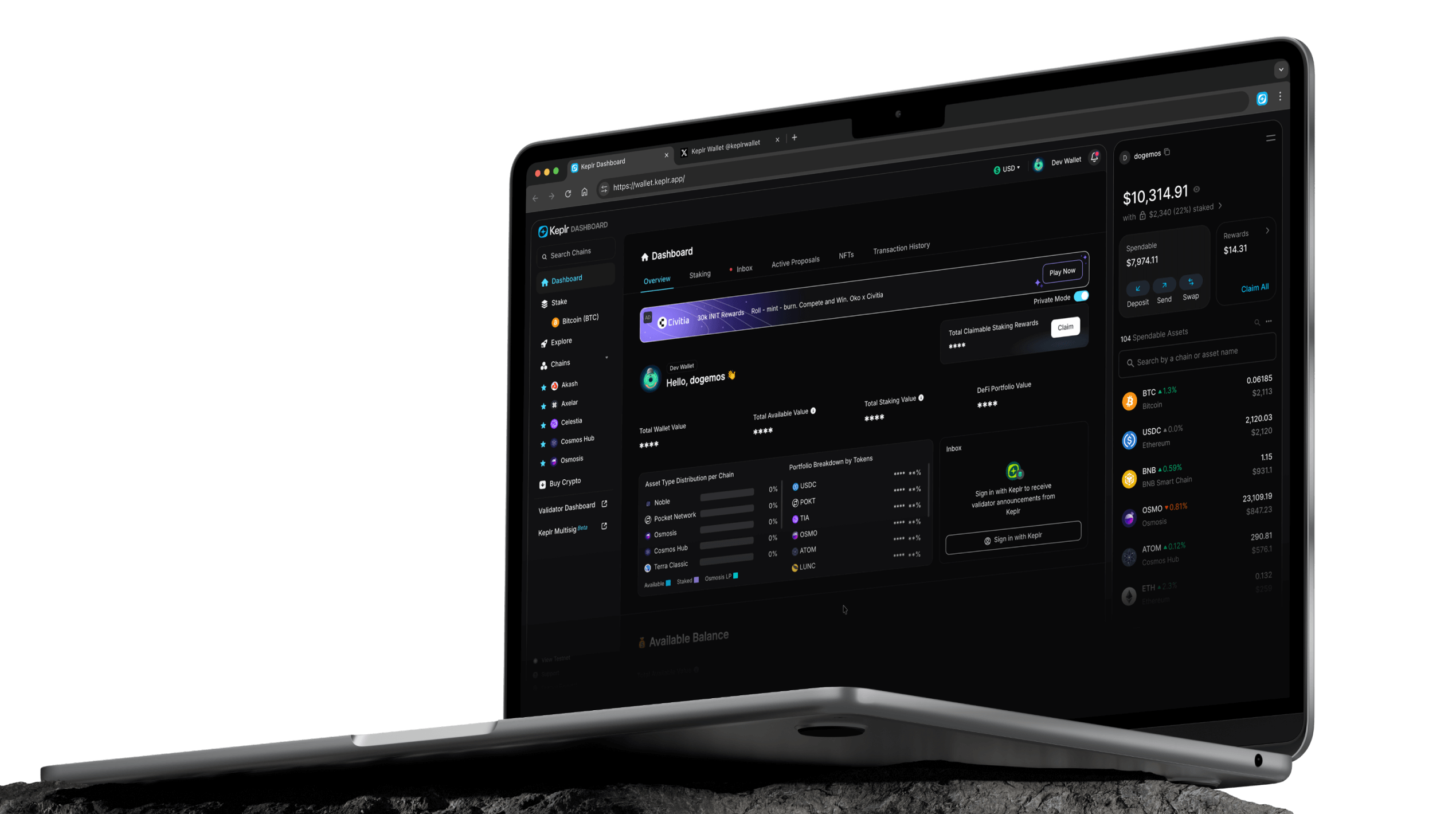
Keplr wallet is more than a receive-and-send screen. On supported networks, it can help users stake tokens with validators, claim staking rewards, vote on governance proposals, track assets, manage multiple accounts, and review transaction history. Some versions and networks also support cross-chain swap flows, fiat on-ramp access, address books, privacy controls, and chain-specific tools.
Keplr wallet staking features are especially relevant to Cosmos users. Staking may let users delegate tokens to validators and participate in network security, but it also involves risks such as unbonding periods, validator performance, slashing rules, changing reward rates, and liquidity constraints. Keplr wallet can display useful information, but it is not a guarantee of yield, validator reliability, or future token value.
Keplr wallet can also help users manage multiple accounts. Some people use one account for long-term storage, another for app testing, and another for smaller day-to-day transactions. This separation can make approvals easier to reason about. However, it also increases the number of addresses, backups, and balances to track, so users should document their own account structure carefully.
Is Keplr wallet safe?
Keplr wallet can be a safe tool when installed correctly, kept updated, and used with disciplined self-custody habits. It is non-custodial, meaning the user controls access rather than relying on a centralized service to recover funds. That is powerful, but it also means Keplr wallet cannot simply reverse a mistaken transaction or restore an account for someone who lost the only recovery method.
Keplr wallet security depends on several layers: the device, browser, operating system, wallet password, recovery phrase storage, connected apps, hardware wallet use, and the user's ability to identify scams. Phishing pages may imitate familiar apps, fake airdrops may request dangerous approvals, and malicious links may urge users to type a recovery phrase. Keplr wallet users should slow down whenever a page creates urgency.
Keplr wallet users should also think about transaction readability. A wallet prompt is only useful if the person approving it understands the action. If the message is unclear, stop and verify with official documentation, app support channels, or a trusted block explorer. Never assume that a recognizable logo or a shared link proves that a request is legitimate.
Keplr wallet fees, addresses, and transaction timing
Keplr wallet does not set every cost you will encounter. Blockchain transactions require network fees, and those fees vary by chain, activity, congestion, and selected fee level. Exchanges may also charge withdrawal fees before assets ever reach Keplr wallet. If you transfer through IBC, there may be fees or timing considerations on the source and destination chains.
Keplr wallet users should keep a small amount of the native fee token on each active chain. For example, if you hold an asset on a Cosmos-based chain but have no balance for fees, you may be unable to move, stake, claim, or swap it until you add the needed fee token. This is one reason test transfers and careful balance planning matter.
Keplr wallet addresses deserve the same attention as fees. Copying an address from one chain and using it for another chain can cause confusion or loss, depending on the sending platform and network. Before sending, compare the chain name, address prefix, asset symbol, memo requirement, and amount. A small delay is better than a rushed transaction that cannot be undone.
Keplr wallet alternatives and when to compare options
Keplr wallet is a natural choice for many Cosmos and Interchain users, but it is not the only wallet category to consider. Some users compare browser wallets, mobile wallets, hardware wallets, exchange custody, and chain-specific wallets based on convenience, supported networks, signing clarity, open-source components, hardware support, and the apps they intend to use.
Keplr wallet may be preferable when the priority is connecting to Cosmos apps and managing many supported chains from one interface. A hardware wallet may be preferable for larger balances or long-term holdings if the relevant chains and apps are supported. Exchange custody may feel simpler for beginners, but it usually limits direct app access and leaves the user dependent on the exchange's withdrawal policies, outages, and account controls.
The best comparison is practical rather than ideological. Keplr wallet should be evaluated against the assets you hold, the apps you use, the device you trust, and your comfort with self-custody. No wallet removes crypto market risk, smart contract risk, validator risk, app risk, or user error. Verify current support, fees, and security guidance with official sources before acting.
What should new users remember about Keplr wallet?
Keplr wallet is useful because it brings many parts of Cosmos and the interchain experience into one interface. It can create addresses, receive funds, sign app transactions, support IBC movement, and help users stake or vote where those features are available. The same flexibility also means a user must pay attention to networks, approvals, recovery methods, and fees.
Keplr wallet is best approached with a measured workflow. Install carefully, back up the recovery method offline, test with small amounts, leave funds for fees, verify app URLs, and read every approval screen. When details change, such as supported chains, app permissions, wallet features, or exchange withdrawal rules, confirm them with official sources. Keplr wallet can be a strong gateway into Cosmos apps, but the safest results come from patient verification rather than speed.
Reader rating:
4.8 / 5
based on 137 ratings
Questions and Answers
What is Keplr wallet used for?
Keplr wallet is used to manage self-custody crypto accounts across Cosmos and other supported blockchain networks. Users can receive assets, send transactions, connect to decentralized apps, stake supported tokens, vote on governance proposals, and move assets between compatible chains through IBC workflows. It is a wallet interface, not a guaranteed recovery service or investment product, so users remain responsible for addresses, approvals, backups, and fees.
Is Keplr wallet only for Cosmos?
Keplr wallet is best known for Cosmos and Interchain activity, but its supported network list has expanded over time and can include other ecosystems depending on the current product version. Users should not assume every chain or token is supported. Before sending funds, check the active network inside Keplr wallet, confirm the receiving address format, and verify current support through official wallet and app information.
Do I need a memo when sending funds to Keplr wallet?
A memo is commonly required when sending funds to a centralized exchange because many customers may share an exchange deposit address. When sending from an exchange to your own non-custodial Keplr wallet address, a memo is often not required. However, requirements can vary by asset, network, and platform. Always read the sending platform's instructions and test with a small amount before transferring more.
Can Keplr wallet recover my account if I lose my recovery phrase?
Keplr wallet is non-custodial, so recovery depends on the account method you used and the backup you kept. For recovery phrase accounts, the phrase is the critical backup, and losing it can mean losing access if the device is also unavailable. Keplr wallet cannot safely ask for or store that phrase for you. Keep backups offline and never share them with websites or support accounts.
How should I fund Keplr wallet for the first time?
The safest first funding workflow is to copy the correct receiving address from Keplr wallet, choose the matching network on the exchange or sending wallet, and send a small test amount. Wait until the funds appear on the intended chain before sending more. Keep some native tokens available for transaction fees, and remember that using apps like Osmosis may require a separate IBC deposit after the initial withdrawal.
Is staking through Keplr wallet risk free?
No. Keplr wallet may provide staking tools for supported networks, but staking can involve validator performance risk, slashing rules, unbonding periods, changing rewards, and token price volatility. The wallet helps you sign and manage staking transactions; it does not guarantee returns or validator behavior. Review validator information, network rules, and official documentation before delegating assets.
What is the difference between Keplr wallet extension and mobile app?
The Keplr wallet browser extension is commonly used on desktop with web-based decentralized apps, while the mobile app is designed for on-the-go account management, receiving funds, staking, app browsing, and transaction approvals. Feature availability can differ by device, version, and network. Many users use both, but they should manage backups carefully and confirm they are using official apps.
Follow this guide to learn how to send coins from the Crypto.com mobile app to your Keplr mobile wallet.
Start by opening your Keplr wallet mobile app. Navigate to the Cosmos Hub network, and click to copy your ATOM deposit address.
Next, on your
crypto.com
app, click Transfer on ATOM to withdraw to an External Wallet.Add your Keplr Cosmos address to your Withdrawal Whitelist under ATOM network.
There is no memo required when sending from an exchange to a non-custodial wallet like Keplr, only when sending back to a centralised exchange that uses the same wallet address for all users.
Once your Keplr ATOM address is whitelisted, continue with the withdrawal.
It is a good idea to try a small test transaction when withdrawing to a new wallet for the first time.
When
crypto.com
has completed your ATOM withdrawal, you will see it on the Cosmos Hub section of your Keplr wallet, as shown in the first step. Now you will deposit it onto the Osmosis chain.
Click the world icon on the toolbar at the bottom of Keplr and then follow the link to Osmosis.Open the menu on Osmosis and click through to the Assets page.
Find ATOM in the Assets list and click Deposit.Deposit your desired amount of ATOM onto Osmosis, leaving some ATOM for fees.
After approving the transaction in Keplr, the IBC transfer will be processed and a message will pop up when it is complete.You can now head back to the Trade page and begin trading on Osmosis!